
Austria’s installed PV capacity grew by almost 6,500 per cent between 2010 and 2023. Those modules are coming back — and they need a treatment route.
Anyone talking about photovoltaics today is talking about new installations. We are talking about what comes afterwards. Depending on their design, modules last two to three decades. What was installed in the 2010s will reach the end of its service life in the coming years — on a scale for which there are barely any treatment routes so far.
The figures
Installed PV capacity in Austria stood at 98.5 MWp in 2010. By 2023 it was 6,395 MWp — an increase of almost 6,500 per cent in thirteen years. For 2025 alone, new installations of 1,300 to 1,500 MWp are expected.
Why the glass is the hardest part
A photovoltaic module is 73 per cent glass, plus 12 per cent plastics, 10 per cent aluminium, 3 per cent silicon and 2 per cent other metals. The glass decides whether treatment succeeds: only at high purity can it go back into PV production. Anything below that is a downgrade — technically possible, but not the goal.
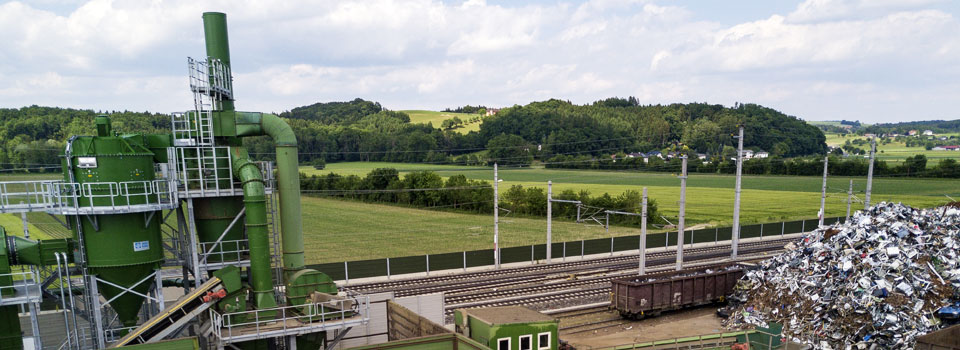
Our recycling solution for PV modules is certified to CENELEC and available directly at the Amstetten site. Our development team is working on separating the individual components even better.
Reuse beats recycling
In parallel we are pursuing a second approach: together with the startup 2ndcycle we test still-working modules fully automatically at laboratory level. Anything that still produces electricity should not be dismantled at all. That is not an exception to the rule but the rule itself — reuse sits above recycling in the waste hierarchy.