
Ferrous scrap
Ferrous metals have been recycled for more than a century because steel does not lose its physical properties in the recycling process. Reprocessing is more economical than mining and smelting.
Process
Copper is the problem — hence two dedicated shredders
The treatment route depends on the iron content and the contamination of the input material.
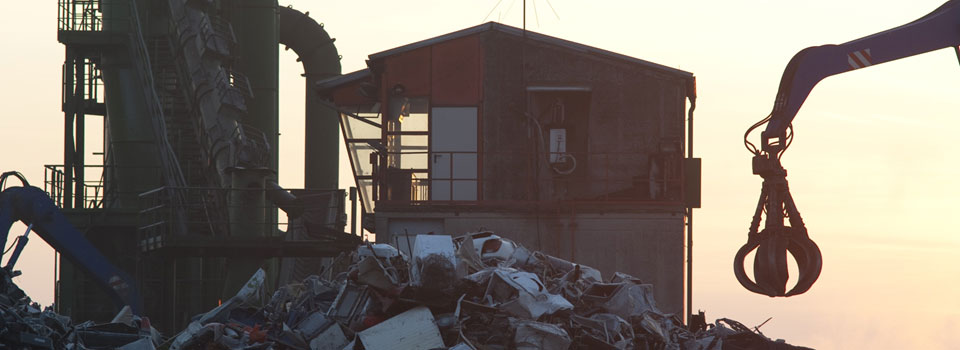
The group operates various shears and shredders for different input materials. We process ferrous metals from end-of-life vehicles, electronic scrap, residual waste, building materials, transport equipment and packaging.
One problem in steel recycling is copper: even small amounts impair the quality of the new steel, and electronic scrap brings comparatively much of it. To minimise copper contamination we have commissioned two specialised shredders for electronic scrap.
Stainless steel is also recovered by the Müller-Guttenbrunn Group because it is fully recyclable.
- All common grades of the EU-27 steel scrap list
- Shears and shredders for different input materials
- Two dedicated electronic scrap shredders to minimise copper
- Around 16 per cent energy saving compared with steel from ore
- Collection by truck, loading by rail and ship
Energy
Secondary against primary
Producing secondary ferrous metals saves around 16 per cent of energy costs and one tonne of CO₂ per tonne compared with new steel from ore.
Energy input, steel
Energy input, aluminium
Figures according to the Müller-Guttenbrunn Group.
Tell us what you have.
Whether you are delivering material, buying secondary raw materials or need a disposal route for an entire plant — send us the details. We usually reply the same working day.